
How to Spot a Bad Deal: The Red Flags We See Every Week
If you spend enough time inside dealerships, you start to notice a pattern. The worst deals don’t reveal themselves when you’re browsing online or exchanging friendly texts with a salesperson. They show up later — usually when you’re sitting in the finance office, staring at a buyer’s order that looks nothing like the price you were promised. By that point, most people feel too invested to walk away. Dealers know this. They count on it.
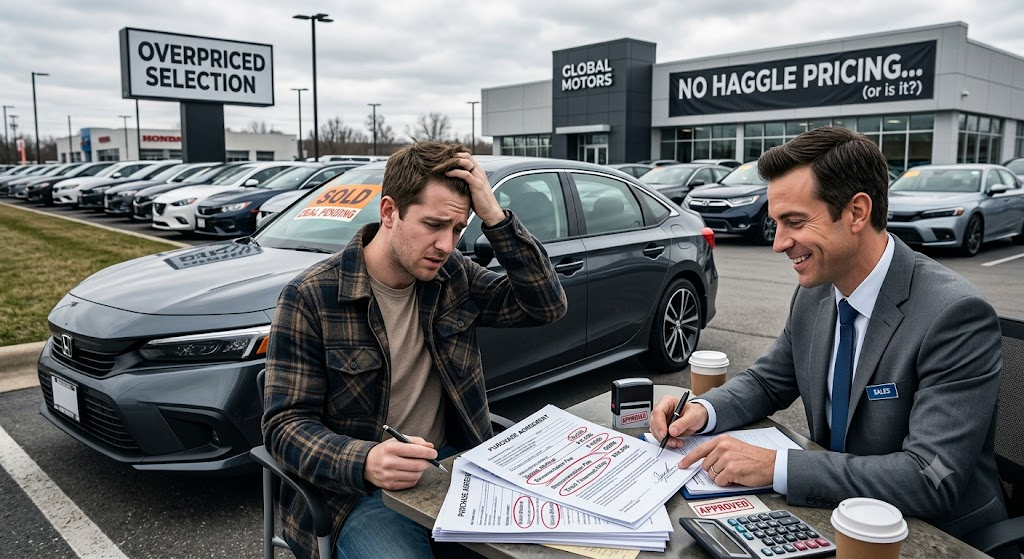
The only way to avoid that moment is to recognize a bad deal long before you reach the back office. Once you understand the signals, the entire game becomes easier to read — and much easier to shut down.
Why Bad Deals Are Everywhere in 2026
The dealership landscape has changed dramatically. Profit no longer comes from selling cars; it comes from everything wrapped around the sale. Cox Automotive’s 2026 Retail Trends Report notes that more than one‑third of dealership gross profit now comes from F&I products and add‑ons, not the vehicle itself.
Source: https://www.coxautoinc.com/industry-insights/
That shift has pushed dealers to rely on software that automatically adjusts pricing, creates artificial urgency, and hides fees behind “market conditions.” Kelley Blue Book found that market adjustments now appear on roughly 22% of new‑car listings, a number that would have been unthinkable a decade ago.
Source: https://www.kbb.com/car-advice/best-car-deals/
Buyers assume online pricing is transparent. Dealers assume buyers won’t notice the difference once they’re deep into the process. Both assumptions are wrong.
The Red Flags That Signal a Bad Deal
Every overpriced buyer’s order we’ve ever reviewed starts with the same handful of warning signs. They don’t always appear in the same order, but they always appear.
The Out‑The‑Door Price Evasion
A dealer who refuses to send a clean out‑the‑door price isn’t confused — they’re hiding something. A real OTD price forces them to disclose every fee, every add‑on, and every adjustment. Consumer Reports has repeatedly warned that dealers who avoid providing written OTD pricing are “significantly more likely to add fees during the transaction.”
Source: https://www.consumerreports.org/cars/buying-a-car/
If they won’t send it, the deal is already bad.
The Online Price That Magically Changes
One of the most common traps is the mismatch between the online listing and the buyer’s order. Dealers advertise one number to generate leads, then quietly add “mandatory” packages, nitrogen tire fees, or market adjustments once you’re in the building. Edmunds’ 2026 dealership audit found that 17% of online prices differed from the in‑store buyer’s order by more than $1,000.
Source: https://www.edmunds.com/car-buying/
When the buyer’s order doesn’t match the online price, you’re not looking at an accident — you’re looking at a strategy.
The Fiction of Mandatory Add‑Ons
Paint protection, VIN etching, LoJack, interior protection, nitrogen tires — none of these are required by law, and none are required to purchase a vehicle. Yet dealers routinely present them as mandatory. The FTC’s Auto Retail Report documented widespread misuse of the term “required,” noting that over 60% of surveyed buyers were told at least one add‑on could not be removed.
Source: https://www.ftc.gov/reports
If a dealership insists an add‑on is mandatory, you’re being misled.
The Monthly Payment Diversion
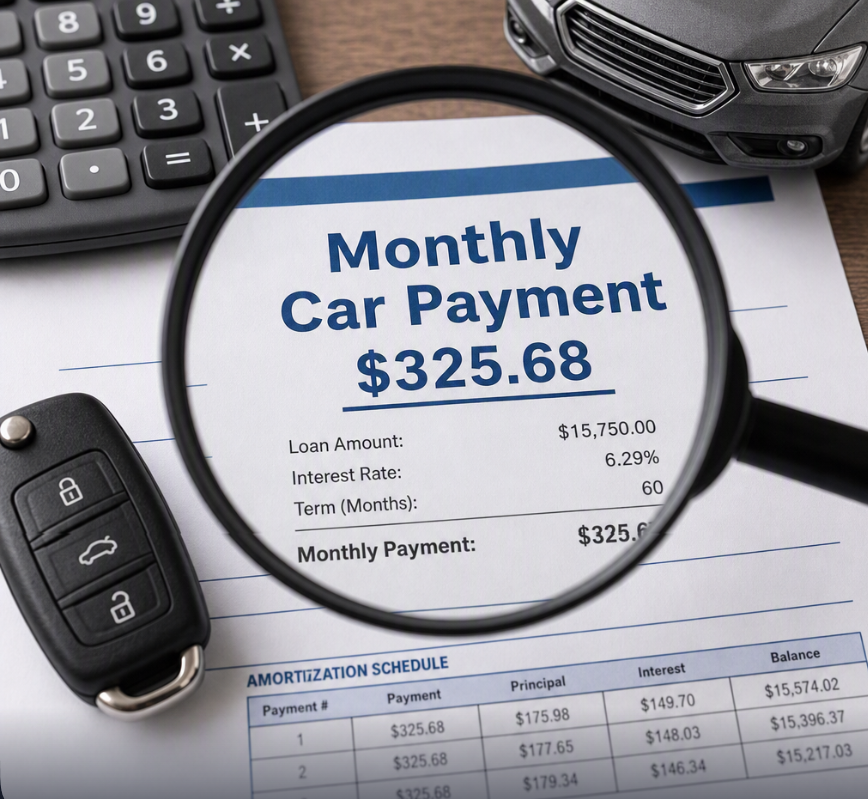
When a salesperson keeps steering the conversation toward monthly payments, it’s because they don’t want you looking at the actual price. Stretching a loan from 60 to 84 months can make a bad deal look affordable, even though the buyer ends up paying thousands more in interest. Bankrate’s 2026 auto finance analysis shows that 84‑month loans carry interest rates nearly 1.5% higher on average than shorter terms.
Source: https://www.bankrate.com/loans/auto-loans/
If the dealership is talking about payments instead of price, they’re hiding something.
The Aging Inventory That Somehow Isn’t Negotiable
Inventory age is one of the most powerful negotiation tools buyers have — and one of the least understood. Cars.com’s 2026 inventory tracker shows that vehicles sitting on the lot for 60+ days are far more likely to be discounted, and those over 75 days often receive additional factory incentives.
Source: https://www.cars.com/research/
When a car has been aging for months and the dealer still refuses to negotiate, it’s not because the vehicle is special — it’s because they’re trying to squeeze every last dollar out of it.
The Buyer’s Order Blackout
A dealer who refuses to send a buyer’s order before you visit is almost always planning to add fees in person. This tactic is designed to control the negotiation by forcing you into the dealership, where psychological pressure is higher and walking away feels harder. Consumer Reports has repeatedly warned that refusal to provide a buyer’s order remotely is one of the clearest indicators of a high‑pressure sales environment.
Source: https://www.consumerreports.org/cars/buying-a-car/
If they won’t send it, they’re hiding profit.
The Trade‑In Offer That Doesn’t Add Up
Trade‑ins are one of the easiest ways for dealers to manipulate a deal. By undervaluing your trade, they can make the overall transaction look more attractive while quietly padding their margin. Kelley Blue Book’s trade‑in data shows that dealers undervalue trade‑ins by an average of 8–15% when buyers don’t present competing offers.
Source: https://www.kbb.com/whats-my-car-worth/
If the trade‑in feels low, it almost certainly is.
How to Shut Down a Bad Deal Before It Starts
There’s a single sentence that eliminates most dealership games:
“Send me your best out‑the‑door price with a clean buyer’s order — no add‑ons, no protection packages, no surprises.”
That line forces transparency. It removes their ability to manipulate numbers later. And if they refuse, you’ve already learned everything you need to know.
The smartest buyers negotiate over text or email, reject add‑ons upfront, request quotes from multiple dealers, and walk away the moment something feels off. Once you remove the dealership’s ability to control the environment, the games fall apart.
Final Takeaway
Bad deals aren’t random. They follow predictable patterns, and once you know what to look for, they become impossible to miss. The dealership’s greatest advantage is confusion — your greatest advantage is clarity. If you recognize the red flags early, you can avoid the traps entirely and secure a clean, honest, out‑the‑door price without wasting time, energy, or money.
If you’d rather skip the entire process, DriversHub handles every step — from negotiation to buyer’s order verification — ensuring you never fall into one of these traps again.


